February 11, 2017

“Dying / Is an art, like everything else.”


“Lady Lazarus” is one of the best-known poems by the American poet and novelist Sylvia Plath.

It includes the oft-quoted lines:

       “Dying
        Is an art, like everything else.
        I do it exceptionally well.

        I do it so it feels like hell.
        I do it so it feels real.
        I guess you could say I've a call.”

This famous passage has a link to February 11th, but not because Plath wrote it on that date. She wrote the poem in October 1962.

The link is that on February 11, 1963 Plath turned art into reality by dying — at her own hand.

She stuck her head in the gas oven in her London flat and killed herself.

Plath had tried to commit suicide before but survived, a fact reflected in the dark humor of “Lady Lazarus.”

If you are a fan of Plath and her her poetry, you may know the story of why she was feeling suicidal again on that February day.

In 1956, after winning a Fulbright scholarship, Plath attended Newnham College in England. There she met the British poet Ted Hughes and married him the following year.

It was, as they say, a troubled marriage. And, Plath and Hughes could both be described as troubled people.
Hughes was a philanderer and (allegedly) abusive.

Plath suffered from periods of severe depression. Today, she would probably be diagnosed with clinical depression and possibly bipolar disorder.

In September of 1962, Hughes abandoned Plath and their two young children, Nicholas and Frieda, to live with a beautiful German expatriate named Assia Wevill.

The anguish Plath felt inspired some of her best poems, including “Lady Lazarus.”

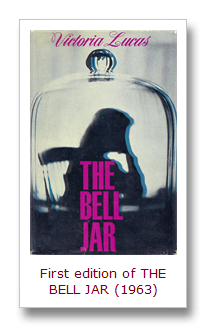
And, in January 1963, Plath’s highly-acclaimed, semi-autobiographical novel The Bell Jar was published (under the pseudonym Victoria Lucas), putting her on the verge of worldwide fame.

A month later, on February 11th, Plath killed herself.

Ted Hughes has been vilified ever since by feminists and many other people, though he also has his defenders.

Given her depression problems, Sylvia Plath might have committed suicide regardless of how Hughes treated her.

But it’s hard to overlook the fact that in 1969, following six turbulent years with Hughes, Assia Wevill also committed suicide — after killing the daughter she and Hughes had together.

*     *     *     *     *     *     *     *     *     *

Comments? Corrections? Post them on the Famous Quotations Facebook Page.

Related reading and listening…

December 22, 2016

“Let It Snow!” – the Christmas song that isn’t…


Every year at Christmas time, when I hear someone sing or say “Let It Snow!” I am reminded of what I learned when I looked into the song that popularized that phrase.

It was launched into our holiday lexicon in December 1945, when singer and big band leader Vaughn Monroe released the first recording of “Let It Snow! Let It Snow! Let It Snow!”

On December 22, 1945 his 78 RPM recording of that song entered the Billboard “Best Sellers in Stores” chart (a precursor of Billboard’s Top 40 and Hot 100 charts).
 
The words were written by lyricist Sammy Cahn. The music was by Cahn’s songwriting partner at the time, Jule Styne.

Monroe’s version of the song quickly became a huge hit, making it to Billboard’s number one spot on January 26, 1946.

In the decades since then, “Let It Snow! Let It Snow! Let It Snow!” has been recorded by countless other singers and bands.

Nowadays, many people think it’s a traditional Christmas song. “Let It Snow” is common on Christmas cards and in Christmas-related internet posts.

But, in fact, there’s no reference to Christmas or the holiday season in the lyrics and it wasn’t intended to be Christmas song.

It’s actually a romantic, somewhat corny love song about a guy who is visiting his girlfriend during the winter in some unnamed location.

Since it was the era of PG lyrics, the guy is not expecting to stay for the night. However, when it’s time for him to leave, “the weather is frightful.”

Gosh darnit! It’s snowing too hard for him to travel safely.

The lyrics are written from the guy’s point of view. He seems to see the weather as a stroke of luck and is happy to “let it snow.” 

He suggests to the girl that he’d hate to go out into the storm right at that moment, but if she’d just hold him tight for a while he’d be warm all the way home.

He also mentions he’d brought some popcorn they didn’t get around to eating yet, and the fire is so delightful, and the lights are turned down low, and…

And, the girl buys his snow job. Perhaps not reluctantly.

Then, like in the movies, there’s sort of a fade to a later time in the lyrics. The fire is dying and the couple is still, er, “good-bye-ing.”

Yeah, baby! “Let it snow! Let it snow! Let it snow!”

Although you may not be old enough to have heard Vaughn Monroe’s original version when it first entered the Billboard chart on December 22, 1945, you’ve heard it if you’re a fan of Bruce Willis action movies.

Monroe’s recording of “Let It Snow! Let It Snow! Let It Snow!” is the first song that plays during the end credits of Willis’ popular action movie Die Hard. It was also used in the soundtrack of Die Hard II.
 
So, yippee-kay-yay, fellow Bruce fans! Click on the video link at right and sing along! Here are the lyrics...

       “Oh, the weather outside is frightful
       But the fire is so delightful
       And since we’ve no place to go
       Let it snow! Let it snow! Let it snow!

       It doesn’t show signs of stopping
       And I brought some corn for popping
       The lights are turned way down low
       Let it snow! Let it snow! Let it snow!

       When we finally kiss good night
       How I hate going out in the storm
       But if you really you hold me tight
       All the way home I’ll be warm.

       The fire is slowly dying
       And, my dear, we’re still good-bye-ing
       But as long as you love me so
       Let it snow! Let it snow! Let it snow!”

Ironically, as noted in the excellent book Stories Behind the Greatest Hits of Christmas, Cahn and Styne wrote the song while sitting in a stifling hot office in Hollywood during the summer of 1945.

Author Ace Collins says Styne worked out a melody he thought sounded “cool” on the piano. Then Cahn turned his thoughts to winter and: “Looking out the window at the California sun baking the landscape, he whispered, ‘Let it snow.’”

It was perfect! In a short time, Cahn and Styne finished what is now considered one of the top 25 Christmas songs of all time — even though it’s not really about Christmas.

*     *     *     *     *     *     *     *     *     * 

Comments? Corrections? Post them on the Famous Quotations Facebook page. 

Related reading, listening and viewing…

December 03, 2016

“Out Where the West Begins”


On an early December night in 1911, journalist Arthur Chapman was trying to come up with a topic for his regular column in the Denver Republican newspaper, called “Center Shots.”

As he was thinking, he saw an Associated Press dispatch about an ongoing disagreement between the Governors of several Western states.

They were arguing over which state should be considered the state where “the West” begins.

The AP story gave Chapman a flash of inspiration. He sometimes wrote cowboy-style poems for his column and, in a matter of minutes, he wrote one on the topic the Governors were debating.

He titled it “Out Where the West Begins.”

On December 3, 1911 the poem was published for the first time in Chapman’s column in the Denver Republican. It was soon reprinted in other newspapers across the country.

Over the next five years, “Out Where the West Begins” became one of best known bits of verse in America.

In 1917, musician Estelle Philleo wrote music for the poem and turned it into a popular song.

That same year, it was published in a book collecting Chapman’s poetry, Out Where the West Begins and Other Western Verses.

“Out Where the West Begins” made Chapman famous and is still renowned as one of the greatest examples of cowboy poetry.

Here’s how he answered the question of where “the West” begins in his poem:

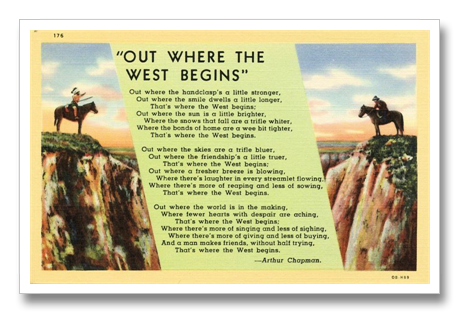
       “Out where the handclasp’s a little stronger,
       Out where the smile dwells a little longer,
             That’s where the West begins;
       Out where the sun is a little brighter,
       Where the snows that fall are a trifle whiter;
       Where the bonds of home are a wee bit tighter;
             That’s where the West begins.
       Out where the skies are a trifle bluer,
       Out where the friendship’s a little truer,
             That’s where the West begins
       Out where a fresher breeze is blowing, 
       Where there’s laughter in every streamlet flowing,
       Where there’s more of reaping and less of sowing,
             That’s where the West begins.
       Out where the world is in the making,
       Where fewer hearts with despair are aching;
             That’s where the West begins;
       Where there’s more of singing and less of sighing,
       Where there’s more of giving and less of buying,
       And where a man makes friends without half trying,
             That’s where the West begins.”

If you’d like to know other answers to question of where the West begins – and where the East peters out – see the post on my QuoteCounterquote.com site at this link.

*     *     *     *     *     *     *     *     *     *

Comments? Corrections? Post them on the Famous Quotations Facebook Page.

Further reading and listening about Cowboy (and Cowgirl) poetry

November 22, 2016

“You say you want a revolution?”


“You say you want a revolution” is a line every Beatles fan knows.

It’s from the song “Revolution” on the Beatles’ famed double album known as The White Album.

John Lennon was inspired to write the song after watching news about the student riots in Paris in May of 1968.

Like many people around the world, he was shocked to see crowds of young people throwing bricks and Molotov cocktails at the police, breaking shop windows and setting cars on fire.

There wasn’t one specific cause for the riots.

Various demonstrators said they were angry about various things, ranging from university policies and tuition costs to the treatment of low wage French workers and the war in Vietnam.

In the lyrics he wrote for “Revolution,” Lennon indicated that he supported efforts to seek social and political changes, but opposed using violence as means to those ends:

       “You say you want a revolution
        Well, you know
        We all want to change the world…
        But when you talk about destruction
        Don't you know that you can count me out.”

The first version of “Revolution,” with the “count me out” lyrics, was released on a 45rpm single record on August 11, 1968. It was the B-side. “Hey Jude” was the A-side.

The video at the top of this post is a live performance of the single release. (In it, Lennon sings “We’d all love to change the world,” instead of “…want to change...”)

On November 22, 1968, the Beatles released their famed double album known as The White Album.

The first song on the second side of the second LP disc was a version of “Revolution,” titled “Revolution 1.”

It was a slower musical take of the song that had been recorded before the version used on the single.

In the final audio mix of “Revolution 1” for The White Album, Lennon overdubbed a snippet of himself saying the word “in” after “Don't you know that you can count me out.”

So, on “Revolution 1” version we hear:

       “But when you talk about destruction
        Don't you know that you can count me out … IN!”

Why the change?

Because after the original single version of the song was released in August, Lennon was criticized by many leftist leaders and groups who felt that “Revolution” insulted them and their positions on social issues.

That bothered Lennon.

John Lennon - Power to the People recordHe actually agreed with many of the positions espoused by Left wing activists; especially their opposition to racism and the Vietnam War and their support for better wages and benefits for common working people. 

One reflection of his inner conflict was the “out … IN!” in “Revolution 1.”

As journalist Jon Wiener noted in his retrospective on Lennon’s music in The Nation, Lennon once explained: “I put both in because I wasn’t sure.”

After 1968, Lennon became even more frustrated by the lack of progress toward the social changes he supported and by the continuation of the war in Vietnam.

In 1971, after the Beatles had broken up, he wrote the song “Power to the People,” a phrase borrowed from the Black Panthers and other radical groups that actually did sometimes espouse violent revolution.

It was recorded by Lennon, Yoko Ono and The Plastic Ono Band and released a single that year.

In the lyrics, Lennon revisited the topic of revolution, writing:

         “Say you want a revolution
        We better get on right away...
        A million workers working for nothing
        You better give ‘em what they really own
        We got to put you down
        When we come into town
        Singing power to the people
        Power to the people.”

The record jacket for the “Power to the People” single shows a photo of Lennon with his clenched fist raised in a revolutionary-style power salute.

I’m a huge fan of the Beatles and like a lot of the solo music John Lennon recorded before his tragic assassination by John Hinckley in 1980.

As I was writing this post, I listened to “Power to the People” again on YouTube.

The music still sounds pretty good. And, as a Baby Boomer who leaned fairly far left in the Seventies, I recall why I related to the song’s message back then.

But nowadays, as I near my own Seventies agewise, I prefer “Give Peace a Chance.”

*     *     *     *     *     *     *     *     *     *

Comments? Corrections? Post them on the Famous Quotations Facebook group.

Related reading, listening and viewing…

November 18, 2016

“We will bury you!” (Or something like that.)


On November 18, 1956, Communist leader Nikita Khrushchev, the head of the Soviet Union, attended a party at the Polish Embassy in Moscow.

At that event, he made some boasting comments about the competition between Communism and “capitalist states” like the US.

One of those comments included what would become Khrushchev’s most famous (and infamous) quotation.

The words he spoke in Russian were “My vas pokhoronim,” an idiomatic expression that was traditionally used as a humor-tinged taunt in Russia.

Some translations say it means “We will outlast you.” But since the word pokhoronim does refer to burial, it has also been interpreted as “We will be present at your funeral.” 

It bears a similarity to the American English idiom “It’s your funeral,” which is often used jokingly.

US news reports translated Khrushchev’s remark as “We will bury you.”

In an era when nuclear war between US and USSR was a constant concern, Americans didn’t see it as funny.

The context of the quote involved comments Khrushchev made about two recent world events.

One was the brief revolution in Soviet-dominated Hungary, which had just been brutally squashed by Russian troops.

The other was the recent bombing and invasion of Egypt by France, Britain and Israel, precipitating the Suez Crisis.

At the Embassy party on November 18th, Khrushchev blamed Western-backed “Fascist gangs” for fomenting the rebellion in Hungary. He also denounced the “imperialists and their puppets” who had attacked Egypt, a recent Soviet ally.

Then, according to an Associated Press report, Khrushchev added:

“Socialist states...base ourselves on the idea that we must peacefully co-exist. About the capitalist states, it doesn’t depend on you whether or not we exist...If you don’t like us, don’t accept our invitations and don’t invite us to come to see you. Whether you like it or not, history is on our side. We will bury you.”

The story caused a huge stir in the US.

Headlines blared “‘We Will Bury You,’ Russian Boss Rants” and “Raging Soviet Boss Shouts At The West ‘We Will Bury You.’” 
 
Many Americans believed Khrushchev was saying that the Soviet Union could — and some day would — violently destroy the US and its allies, implicitly in a nuclear war.

Nowadays, most books and Internet posts that cite the quote say “We will bury you” is a mistranslation of the Russian idiom and that Khrushchev was being more flippant than fearsomely threatening.

A post on the always-interesting site Cracked.com, titled “6 Mistranslations That Changed The World,” offered this explanation:

“As it turns out, a better literal translation of his words would have been, ‘We will be present when you are buried.’ This was actually a pretty common saying in Soviet Russia. What Khrushchev really meant was, ‘We will outlast you.’ It was just the usual ‘communism is better than capitalism’ posturing that went on all the time in the Cold War, but thanks to misinterpretations...Americans thought Khrushchev was threatening to literally bury us in the rubble of a nuclear attack.”

I grew up in the 1950s, when we practiced “duck and cover” drills at school and families were building fallout shelters in their back yards in the hopes of surviving the expected nuclear showdown with Russia.

I tend to think the modern take on Khrushchev’s most (in)famous quote overlooks something.

In 1956, the nuclear arms race and the threat of nuclear war were real and taken very seriously.

“We shall be present at your funeral” or “We shall outlive you” or any of the other “better” translations that are now suggested would probably have sounded just as hostile and threatening to most Americans.

So the fact that “We will bury you” may have been a mistranslation, misquote or misunderstanding, while interesting, may also be moot.

The concern caused by Khrushchev’s use of the words “My vas pokhoronim” would likely have been the same in the US regardless of the translation.

Of course, six years later, during the 1962 Cuban Missile Crisis, we found out Khrushchev didn’t actually have the sharries to start a nuclear war with the U.S.

He backed down after President John F. Kennedy threatened to push the button first if the Soviets refused to remove the nuclear missiles they had secretly shipped to Cuba.

I don’t know what Kennedy said to Khrushchev behind the scenes during that high stakes game of Cold War brinksmanship.

But I suspect it might have been something along the lines of “We will bury you.”

*     *     *     *     *     *     *     *     *     *

Comments? Corrections? Post them on the Famous Quotations Facebook group.

Related reading, listening and viewing…

Copyrights, Disclaimers & Privacy Policy


Copyright © Subtropic Productions LLC

All original text written for the This Day in Quotes quotations blog is copyrighted by the Subtropic Productions LLC and may not be used without permission, except for short "fair use" excerpts or quotes which, if used, must be attributed to ThisDayinQuotes.com and, if online, must include a link to http://www.ThisDayinQuotes.com/.

To the best of our knowledge, the non-original content posted here is used in a way that is allowed under the fair use doctrine. If you own the copyright to something posted here and believe we may have violated fair use standards, please let us know.

Subtropic Productions LLC and ThisDayinQuotes.com is committed to protecting your privacy. For more details, read this blog's full Privacy Policy.