March 07, 2022

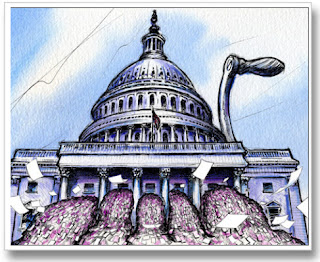
The awful origin of “The pen is mightier than the sword.”


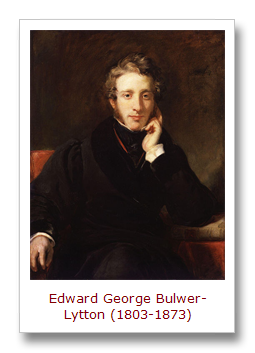
On March 7, 1839 the play Richelieu: or, the Conspiracy, by the British politician and author, Edward George Bulwer-Lytton, premiered at the Covent Garden Theatre in London.

Few people today have heard of this play. But everyone knows one of the lines in it: “The pen is mightier than the sword.”

The basic meaning of this famous quote — that the written word can be mightier than physical force or military power — was not originated by Bulwer-Lytton. There are similar lines in earlier works by various authors.

But Bulwer-Lytton’s play Richelieu is the origin of the version that became a familiar saying.

Edward George Bulwer-Lytton, a.k.a. the 1st Baron of Lytton, is renowned as a writer, but not for being a good writer. He’s renowned for being one of the worst writers in history.

His novels and plays — including Richelieu — are infamously pompous, long-winded and full of badly-constructed language.

The most notorious example is the oft-quoted opening line of his historical novel Paul Clifford (1830), which begins: “It was a dark and stormy night...”

The complete opening line of Paul Clifford is:

“It was a dark and stormy night; the rain fell in torrents-except at occasional intervals, when it was checked by a violent gust of wind which swept up the streets (for it is in London that our scene lies), rattling along the housetops, and fiercely agitating the scanty flame of the lamps that struggled against the darkness.”

That line and the novel are so memorably bad that “It was a dark and stormy night...” became a cliché and joke, even though most people don’t know what it came from.  

It has even inspired an annual contest, The Bulwer-Lytton Fiction Contest, in which entrants compete to submit the most convoluted and inane opening sentence for a fictional work of fiction.

Bulwer-Lytton’s “dark and stormy night” is his most famous bad sentence. But he wrote plenty of others that are equally odd, contorted and hard to fathom.

For example, here’s the full quotation in Act II, Scene II of Richelieu that includes the “pen is mightier” line:

“Beneath the rule of men entirely great,
The pen is mightier than the sword. Behold
The arch-enchanter’s wand — itself a nothing,
But taking sorcery from the master-hand
To paralyze the Caesars, and to strike
The loud earth breathless! Take away the sword,
States can be saved without it!”

If that strikes you as amazingly confusing and pretentious, then you’re not alone.

However, we have to give Bulwer-Lytton his due. He did create several famous quotes, including “the pen is mightier than the sword” — words that are still used and repurposed today.

Of course, as you probably know, his pen and sword aphorism is also the basis for a popular nudge-nudge, wink-wink pun.

If you don’t know the pun I’m talking about, never mind. It’s not actually that funny, even though a lot of us sniggered at it when we were kids.

*     *     *     *     *     *     *     *     *     *

Comments? Corrections? Questions? Email me or post them on my Famous Quotations Facebook page.

Related reading…

March 01, 2022

The 1941 New Yorker cartoon that created the expression “Back to the old drawing board!”


Drawing boards have been used by engineers and architects for more than two centuries.

But the saying “back to the old drawing board” is more recent and can actually be traced to a specific source and date.

It was coined by the American artist Peter Arno in a cartoon first published in the March 1, 1941 issue of New Yorker magazine.

Arno created hundreds of classic cover and interior cartoons for the New Yorker from 1925 until his death in 1968. Many were compiled in a series of popular books.

The caption of one of those cartoons, first published in 1932, popularized the saying “This is a hell of a way to run a railroad!” 

Arno’s phrase-making 1941 cartoon shows a crashed military plane, with the pilot coming down by parachute in the background.

Uniformed military personnel are running toward the plane.

But a nerdy-looking guy in a suit, carrying a roll of papers under his arm, is walking away, saying (in the caption): “Well, back to the old drawing board.”

The nerd is presumably one of the engineers who designed the plane. He seems almost cheerful that he has more design work to do.

The rolled up papers he’s carrying are the engineering drawings for the plane, soon to be put back on his drawing board for modifications.

During World War II, Arno’s caption was picked up and transformed into an idiomatic expression.

The phrase “back to the old drawing board” (or just “back to the drawing board”) became a humorous way of saying that something didn’t work or isn’t working as planned, so a different option or plan is needed.

The expression is still in common use today, though few people know that it comes from a Peter Arno cartoon published on today’s date in 1941.

*     *     *     *     *     *     *     *     *     *  

Comments? Corrections? Questions? Email me or post them on my Famous Quotations Facebook page.

Further reading: books featuring NEW YORKER cartoons...

February 24, 2022

February 21, 2022

“Workers of the World, Unite! You have nothing to lose but your chains!”


You can find many different lists of
“books that changed the world” on the Internet.

Those lists vary considerably. But there are some books that show up on almost all of them.

One is The Manifesto of the Communist Party, more commonly known as The Communist Manifesto.

The Manifesto was co-written by Karl Marx and his friend and collaborator Friedrich Engels.

According to most sources, it was first published in London on February 21, 1848 and it did indeed change the world by serving as a key philosophical foundation for socialism and communism. (Some sources give the date as February 26, 1848, but I think they’re wrong.)

The original edition of this seminal work by Marx and Engels was published in German, their native language.

Over the next few years it was translated into many other languages, including English.

Several famous quotations from The Communist Manifesto are included in many books of quotations and still frequently cited today.  

One is the opening sentence of the Preamble:

“A spectre is haunting Europe — the spectre of Communism.”

Another is the first line of Chapter I:

“The history of all hitherto existing society is the history of class struggles.”

The other famous words in The Communist Manifesto are its closing lines, at the end of Chapter IV.

The official English translation of the last four sentences, as approved by Engels, are:

“Let the ruling classes tremble at a Communistic revolution. The proletarians have nothing to lose but their chains. They have a world to win. Working Men of All Countries, Unite!.”

The shortened, more familiar — and often parodied — mistranslation of the last few sentences is:

“Workers of the World, Unite! You have nothing to lose but your chains!”

As it turned out, other people’s visions of “Communistic revolution” and Marxism weren’t exactly what Marx and Engels had in mind.

In a letter he wrote on August 5, 1890, Engels remarked: “Just as Marx used to say, commenting on the French ‘Marxists’ of the late [18]70s: ‘All I know is that I am not a Marxist.’”

You can read some humorous take-offs on the “Workers of the world” quote in the post on my Quote/Counterquote blog at this link.

*     *     *     *     *     *     *     *     *     *   

Comments? Corrections? Questions? Email me or post them on my Famous Quotations Facebook page.

Related reading and listening…

February 12, 2022

“All the news that’s fit to print.”

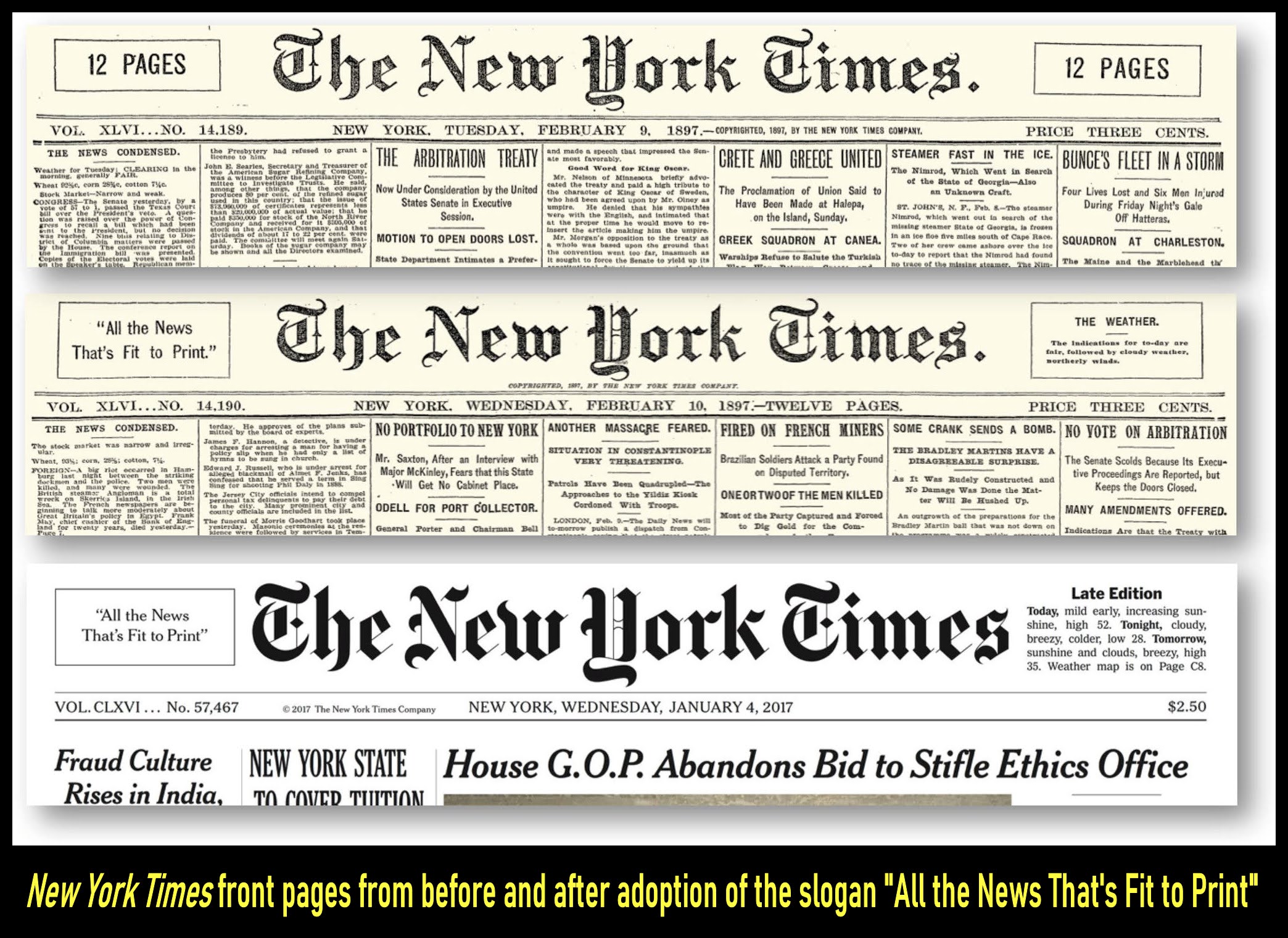
As noted by many sources, “All the news that’s fit to print” — the famous slogan of The New York Times — is linked to the date February 10, 1897.

The edition printed on that date was the first to have the slogan printed at the top left corner of the front page.

It has continued to appear there ever since on print copies of the NYT. (It’s not shown on the digital version.)

Previously, the top left corner of the first page had been used to note the number of pages in that day’s edition.

Contrary to what you may read in some books or internet posts, the use on February 10, 1897 was not the first appearance of the slogan.

It was initially launched in October 1896, a few months after Adolph Ochs became the publisher.

The paper had been struggling and nearly went bankrupt before Ochs took over.

He wanted to elevate the quality of its reporting and distinguish it from the “yellow journalism” newspapers that were common at the time. Such papers were filled with stories that tended to be lurid, sensationalized and often factually inaccurate or outright false.

To sum up his vision for The Times, Ochs coined the slogan “All the news that’s fit to print.”

It debuted publicly on a sign he had placed above New York’s Madison Square in October 1896. The sign spelled out the slogan in red lights.

Later in October, he had it printed at the top of The Times’ editorial page and used it in ads published in newspaper trade journals.

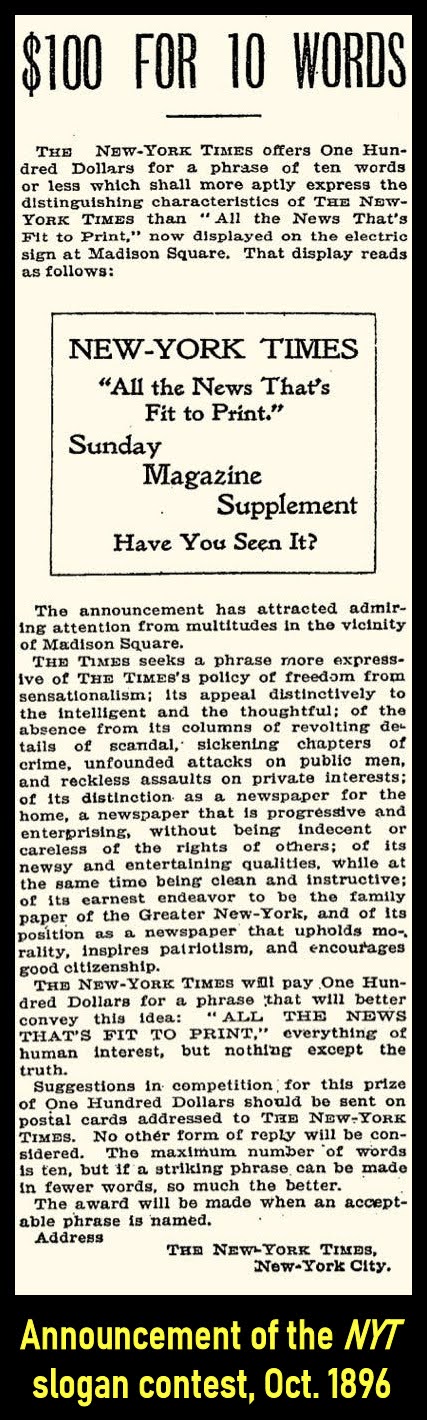
That same month, Ochs came up with what turned out to be a genius idea for publicizing the slogan and The Times. He announced a contest offering a $100 prize to anyone who could come up with a better slogan.

In 2017, NYT writer David W. Dunlap said in an article about the contest:

“Adolph S. Ochs had recently purchased the failing New York Times at what amounted to a fire sale. On the billboard and elsewhere, he tried to distinguish The Times from its competitors by stressing its gravity, thoroughness, accuracy and decorum. But he was a showman, too. He knew that a reward of $100 for a new motto would generate far more than $100 worth of publicity. He invited readers to coin ‘a phrase of 10 words or less which shall more aptly express the distinguishing characteristics of The New York Times.’ He probably had no idea what a sensation his contest would cause. Hundreds of responses began arriving at The Times’s headquarters on Park Row, near City Hall, in Lower Manhattan. Then thousands.”

The publicity created by the contest dramatically increased awareness of The Times, Ochs’ goal of making it a more trustworthy news source — and its readership. But it didn’t lead to a what Ochs considered a better slogan.

Some of the slogan entries emphasized the idea that The New York Times didn’t print the type of lurid stories found in many other newspapers, such as:

“Fresh Facts Free From Filth.”

“News, Not Nausea,”

“You Don’t Have to Apologize for Reading It.”

“It’s Safe to Read The Times.”

“We Propose to Demonstrate That Journalism Is a Decent Profession.”

“For Patriot — Simple, Good and Great; Not for the Degenerate.”

“Clean News for Clean People.”

“A Decent Newspaper for Decent People.”

“Nothing Indecent, Nothing Inane.”

“Clean as New Fallen Snow, It Covers the Whole Ground.”

“Cleanliness Is Honesty! Give Me a Bathtub and The New York Times.”

“All the News Compiled in Language Undefiled.”

Some seem to be versions inspired by Adolph Och’s motto, like:

“All News When Fit, When Not We Wait a Bit.”

“The News That Isn’t Here Is Not Worth Knowing.”

“You Do Not Want What The New York Times Does Not Print.”

“What We Do Not Publish ‘Tis Better Not to Know.”

“What It Doesn’t Print, You Don’t Care to Read.”

“Our News Is News As Is News.”

“All the News to Instruct and Amuse.”

“Such News and Views as Reason Would Choose.”

“The World’s News That’s Fit to Peruse.”

Some clever entries were acrostics, in which the first letters of each word spelled out “The Times” or “Times.” They included:

“Treats Honestly Every Topic Interesting Men Except Scandals.”

“The Information Mankind Earnestly Seeks.”

“Truthful, Instructive, Moderate, Educational, Successful.”

“Terse, Interesting, Moral, Entertaining, Sure.”

“Truthfulness, Independence, Modesty, Energy, Science.”

A few slogan entries seem ironic in retrospect, given evolution of “The Gray Lady” into a liberal-leaning newspaper. For example:

“Courageous, Conscientious, Conservative.”

“Truth Without Trumpery.”

Ochs and his staff selected what they thought were the 150 best slogan suggestions. Then Ochs asked Richard Watson Gilder, editor of The Century Magazine and one of America’s most prominent literary figures, to decide the winner.

Gilder chose the slogan “All the World’s News, but Not a School for Scandal,” submitted by D. M. Redfield of New Haven, Connecticut.

Apparently, Ochs was not impressed. He paid Redfield the $100, but decided to stick with “All the news that’s fit to print.” It became the best known newspaper slogan of all time.

Of course, back in the 1970s, avid readers of Rolling Stone, like me, were more familiar with the slogan that magazine adopted in 1969 — “All the News That Fits.”

Did we know it was a humorous variation on the NYT motto? I don’t remember. Hey, it was the ‘70s.

*     *     *     *     *     *     *     *     *     *

Comments? Corrections? Post them on my Famous Quotations Facebook page or send me an email.

Related reading…

Copyrights, Disclaimers & Privacy Policy


Copyright © Subtropic Productions LLC

All original text written for the This Day in Quotes quotations blog is copyrighted by the Subtropic Productions LLC and may not be used without permission, except for short "fair use" excerpts or quotes which, if used, must be attributed to ThisDayinQuotes.com and, if online, must include a link to http://www.ThisDayinQuotes.com/.

To the best of our knowledge, the non-original content posted here is used in a way that is allowed under the fair use doctrine. If you own the copyright to something posted here and believe we may have violated fair use standards, please let us know.

Subtropic Productions LLC and ThisDayinQuotes.com is committed to protecting your privacy. For more details, read this blog's full Privacy Policy.