Showing posts with label Philosophy quotes. Show all posts

July 02, 2022

“There, but for the grace of God, goes John Bradford.”


It is often claimed that the familiar expression of compassion “There, but for the grace of God, go I” is based on a quote by the 16th Century English Protestant clergyman John Bradford.

According to tradition, Bradford was a prisoner in the Tower of London when he said it.

He had previously been a prominent supporter of the religious reforms imposed by King Edward VI, which essentially banned Catholicism in England and established the Protestant Church of England as the country’s official religion.

Part of this “reformation” involved jailing or executing Catholic clergymen who weren’t willing to go along with the change.

After Edward died in 1553, Mary I (a.k.a. “Bloody Mary” Tudor) took the throne in England and forcefully reimposed Catholicism.

That involved jailing or executing Protestant clergymen who weren’t willing to go along with the change.

One of them was John Bradford, who refused to acknowledge the authority of the Pope and was convicted of “trying to stir up a mob.”

Queen Mary had Bradford locked up in the Tower of London with other notable Protestant leaders, such as Archbishop Thomas Cranmer.

One day while there, legend has it, Bradford looked down and saw a criminal being led to execution. (In some versions of the story, it’s a group of criminals.)

Simultaneously feeling compassion for the criminal and relief that he was better off, Bradford allegedly uttered the famous quotation “There, but for the grace of God, goes John Bradford.”

This quote has long been cited as the origin of the proverbial saying “There but for the grace of God go I.”

This was memorably modernized as “There but for fortune go you or I” by Sixties folksinger Phil Ochs, in his much-covered song “There But for Fortune.”           

It should be noted that modern quote and phrase sleuths have been unable to find any documentation that Bradford actually said anything like the quote he’s alleged to have said.

The traditional story of Bradford’s famous quotation appears to come from biographies written about him in the 1800s, centuries after he was dead.

There’s no record of such a quote in historical records from Bradford’s own time and no such words in his writings.

Nonetheless, “There but for the grace of God goes John Bradford” is included as an attributed quote in many books of quotations. (It’s sometimes given as “But for the grace of God there goes John Bradford.”)

The association this questionable quote has with the date July 1 is ironic.

The usual explanation of the quote’s meaning is that Bradford was expressing sympathy for the soon-to-be-executed criminal (or criminals) and suggesting that, except for God’s mercy, he might be sharing the same fate.

As it turned out, Bradford’s final fate actually was the same. Maybe worse, depending on how the criminal(s) got snuffed.

On July 1, 1555, Queen Mary had Bradford burned at the stake.

*     *     *     *     *     *     *     *     *     *

Comments? Corrections? Questions? Email me or post them on my Famous Quotations Facebook page.

Related reading, listening and viewing…

August 08, 2021

“Turn off your mind, relax and float downstream...”


On August 8, 1966, Capitol Records released the Beatles album Revolver in the United States. (In the UK, the LP was released by Parlophone on August 5.)

Revolver became an immediate chart-topper and is now widely considered to be one of the greatest albums in music history.

It includes several especially famous and popular Beatle songs, like “Eleanor Rigby,” “Yellow Submarine,” and “Here, There and Everywhere.”

Moreover, as a whole, Revolver was a watershed album for the Beatles and popular music — lyrically, musically and even technologically. (Some songs include recording effects never or rarely heard before on a mainstream pop album, like automatic double tracking, tape looping and flanging.)

Rock music historian and critic Richie Unterberger called it “one of the very first psychedelic LPs.”

One of the trippiest songs on the album is “Tomorrow Never Knows.”

Written primarily by John Lennon, it is clearly an ode to the hallucinogenic drug LSD. (In 1972, Lennon openly referred to it as “my first psychedelic song.”)

Unlike some other songs on Revolver, few people can recall many of the lyrics from “Tomorrow Never Knows.”     

If you look for them on the Internet or in books, you’ll find several variations. Almost none have all the lyrics right.

But the famous first line — “Turn off your mind, relax and float downstream” — is well known, cited by thousands of websites and books and usually quoted correctly.

A year or more before they recorded Revolver, John and the other Beatles — Paul McCartney, George Harrison and Ringo Starr — began experimenting with “acid,” like many other musicians who were on the cutting edge of rock music and pop culture in the mid-1960s.

As recounted in many books about the Beatles and psychedelic drugs, John got the opening words of the song from a guide for users of hallucinogens that was co-authored by the Acid King himself, Timothy Leary, with his fellow psychoactive drug pioneers Ralph Metzner and Richard Alpert (a.k.a. Ram Dass).

Titled The Psychedelic Experience: A Manual Based on the Tibetan Book of the Dead, it was published in 1964, a couple of years before Leary began using his catchphrase “Turn on, tune in, drop out.”

In the introduction of the “manual,” Leary, Metzner and Alpert gave this advice to newbie LSD trippers who might feel a bit anxious when they saw the walls melting or felt like they were dying:

       “Whenever in doubt, turn off your mind, relax, float downstream.”

They adapted that recommendation from a line in The Tibetan Book of the Dead, an 8th century Buddhist text originally said to be a guide for people who actually were in the process of dying, prior to reincarnation.

That venerable book says that one stage in the process involves scary hallucinations, or “hell-visions.”

According to the translation in The Psychedelic Experience, the Book of the Dead helpfully explains:

       “The teaching concerning the hell-visions is the same as before; recognize them to be your own thought-forms, relax, float downstream.”

I can’t vouch for the translation or for how well this advice may work during the process of dying.

However, not long after the album Revolver was released, back in my Hippie days, I did do my own experimenting with LSD. And, in that context, I can say that the suggestion to relax and float downstream was pretty good advice.

In addition, having listened to “Tomorrow Never Knows” a thousand times or so, I can say that I’m pretty sure the correct lyrics are as follows (although, given the distortion effect used on Lennon’s voice, I can understand why there are several versions floating around):    

      “Turn off your mind, relax and float downstream,
       It is not dying, it is not dying.
 
       Lay down all thought, surrender to the void,
       It is shining, it is shining.
 
       That you may see the meaning of within,
       It is being, it is being.
 
       That love is all and love is everyone,
       It is knowing, it is knowing.
 
       That ignorance and hate may mourn the dead,
       It is believing, it is believing.
 
       But listen to the color of your dream,
       It is not living, it is not living.

       Or play the game ‘Existence’ to the end,
       Of the beginning, of the beginning.”

By the way, the title of the song has nothing to do with drugs or death or Tibetan Buddhism. Like “A Hard Day’s Night” it’s another Beatles song title that started out as a Ringo Starr malapropism.

During a 1964 interview, Ringo answered a question by saying “Tomorrow never knows.”

Lennon remembered the quip and later explained that he used it as the song’s title “to sort of take the edge off the heavy philosophical lyrics.”

*     *     *     *     *     *     *     *     *     *

Comments? Corrections? Questions? Email me or post them on my Famous Quotations Facebook page.

Related listening and reading…

December 14, 2020

“An atheist is a man who has no invisible means of support.”


There’s a famous quotation about atheists associated with the date December 14 that is
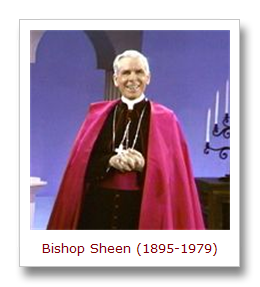
widely attributed to Bishop Fulton J. Sheen:


       “An atheist is a man who has no invisible means of support.”

 
The source that’s usually cited for this quote is the December 14, 1955 issue of LOOK magazine.


Sheen did use this line in an article in LOOK magazine and it’s one of his best known quotes.


However, despite what many quotation reference books and websites say, that article was not in the December 14, 1955 issue of LOOK.


There was no December 14, 1955 issue of LOOK. The LOOK magazine published in mid-December of 1955 was dated December 13, 1955. And, Sheen wasn’t featured in that issue.


He was featured on the cover of the December 14, 1954 issue of LOOK and in an article inside that issue titled “Religion’s Best Sellers.”


So, December 14, 1954 is the correct date for Sheen’s use of “An atheist is a man who has no invisible means of support” in LOOK.

 
It should also be noted that, contrary to what some people think, Sheen didn’t coin that famed saying.


In the book On Being a Real Person, published in 1943, American clergyman Harry Emerson Fosdick wrote:  


       “An atheist, says John Buchan, is ‘a man who has no invisible means of support.’” 


That’s apparently why many books and websites credit the line to John Buchan, the Scottish historian, Governor General of Canada and author of the book The Thirty-Nine Steps (1915).


However, Buchan didn’t coin the line either. His use, in a speech recorded in a law journal in 1935, was a reference to something he’d heard. Buchan said:


       “I have heard an atheist defined as a man who has no invisible means of support.”

 
Who created the definition that Buchan heard? Sorry, I don’t know. At this point, the real origin of the line is still a mystery.


I do know that, in his wickedly funny Devil’s Dictionary (1911), the great American writer, curmudgeon and atheist Ambrose Bierce defined the word prejudice as:


        “A vagrant opinion without visible means of support.”

 
Of course, from an atheist’s perspective “an opinion without visible means of support” might also seem like a reasonably good definition of religion.

*     *     *     *     *     *     *     *     *     *

Comments? Corrections? Post them on my Famous Quotations Facebook page or send me an email.

Related reading...

November 16, 2018

“To crush your enemies...”

For readers of this website who may not know about my other quotation site, QuoteCounterquote.com, here’s a post that will give you an idea of what you’ll find there. Basically, each post on QuoteCounterquote.com features background information on a famous quotation followed by a set of quotes that are interesting or humorous uses, variations and take-offs on the main quotation. It’s easier to show you what that means than explain it, so below is an example based on a famous movie quote. If you like this post, click here to see more. If want to subscribe to future QuoteCounterquote.com posts, click on one of the subscription options at the top of the right sidebar. Cheers! 

*     *     *     *     *     *     *     *     *     *

Conan The Barbarian, What is best in life quote QC wm

THE FAMOUS MOVIE QUOTE:

Barbarian General (actor Akio Mitamura): “Conan, what is best in life?”
Conan (Arnold Schwarzenegger): “To crush your enemies, see them driven before you, and to hear the lamentation of their women!”

       From the film Conan the Barbarian (released in the US on May 14, 1982)
       Arnold Schwarzenegger’s “crush your enemies” line in Conan the Barbarian became the first of his many famous movie quotations as an actor. It’s also the first line he speaks in the film after a full twenty minutes of backstory recounting how Conan was captured as a boy by brutal barbarian raiders, used as a slave, then trained to be a vicious pit fighter and a warrior for his captors. Here’s the dialog from that scene (which you can watch on YouTube):             
         Barbarian General: “We won again. This is good! But what is best in life?”
         Warrior: “The open steppe, fleet horse, falcons at your wrist, wind in your hair!”
         General: “Wrong! Conan, what is best in life?”
         Conan (Arnold): “To crush your enemies, see them driven before you, and to hear the lamentation of their women!”
         Barbarian General: “That is good.”

      Conan’s last seven words are sometimes quoted as “to hear the lamentation of the women,” because Arnold’s Austrian accent makes the word “their” sound like “deh.” But I’m pretty sure it’s “their women” given the inspiration for the movie quote.
      John Milius, who directed Conan the Barbarian and co-wrote the screenplay with Oliver Stone, didn’t create Arnold’s famed catchphrase from whole cloth. It’s not in the Conan stories written by the creator of the character, Robert Howard. But it’s based on a passage in a book by one of Howard’s favorite writers, Harold Lamb.             
       In Lamb’s classic 1927 biography, Genghis Kahn: the Emperor of All Men, he gives his version of a legendary quotation by the great conqueror at the end of Chapter 11. Lamb wrote:             
          One day in the pavilion at Karakorum he asked an officer of the Mongol guard what, in all the world, could bring the greatest happiness.             
          “The open steppe, a clear day, and a swift horse under you,” responded the officer after a little thought, “and a falcon on your wrist to start up hares.”             
          “Nay,” responded the Khan, “to crush your enemies, to see them fall at your feet—to take their horses and goods and hear the lamentation of their women. That is best.”

       The version of Khan’s words crafted by Milius (and/or Stone) for Conan the Barbarian became a popular catchphrase that has since been cited and adapted many times. Some of my favorite examples are below...

Conan cartoon, Peter Kuper, New Yorker

THE FAKE NEWS VERSION:

“I said, ‘Crush your enemies, see them driven before you, and hear the lamentation of their women,’ but the media took that totally out of context.”
       Peter Kuper
       American illustrator and cartoonist               
       His caption for a cartoon spoofing Conan and the frequent lament of politicians, published in The New Yorker, January 2017

Portrait of Cohen the Barbarian by Paul Kidby

COHEN THE BARBARIAN’S VARIATION:

[Nomad]: “What is it that a man may call the greatest things in life?”
[Cohen the Barbarian] “Hot water, good dentishtry and shoft lavatory paper.”
       From the Discworld novel The Light Fantastic (1986) by Terry Pratchett            
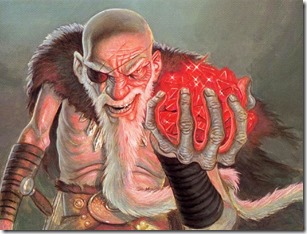
       This quote by the Cohen character (aka Ghenghiz Cohen) is a is a favorite of Discworld fans. Cohen is an aging, toothless barbarian who speaks with a lisp when he’s not wearing the special dentures he has made from the diamond teeth of the troll Old Grandad.
       (Portrait of Cohen with his diamond dentures by Paul Kidby.)

John Ortberg

THE CHRISTIAN IDEAL:

“The heroic figure in Conan the Barbarian was actually paraphrasing Genghis Khan when he gave his famous answer to the question ‘What is best in life?'... An alternative idea came from Galilee: What is best in life is to love your enemies and see them reconciled to you.”
       John Ortberg
       Evangelical Christian author, speaker, and senior pastor of the ECO Presbyterian Menlo Church in Menlo Park, California
       In his book Who Is This Man?: The Unpredictable Impact of the Inescapable Jesus (2012)

Internet troll Conan meme

THE INTERNET TROLL MINDSET:

“WHAT IS BEST IN LIFE? TO TROLL YOUR ENEMIES, TO SEE THEM BUTTHURT BEFORE YOU, AND TO HEAR THE LAMENTATIONS OF THEIR FOLLOWERS!”
       An internet meme seen on ImgFlip.com            

Boo Cocky Robot Chicken Conan

THE ROBOT CHICKEN MUSICAL ADAPTATION:

[Conan singing]: “What is best in life? That is hard to say, for each man is unique in his own way.
As a boy, I liked gumdrops and puppies, sailboats and frogs, and my best friend little Ricky Maebius!
But when I became a young man, what was best in life began to change just like my body.
I liked pretty Stacy Lyon with her long blonde hair and eyes that were blue as the ocean!
But now that I’m grown, my thoughts have changed, and it’s pretty clear to me.
The answer to the question, ‘What is best in life?’ is plain enough for all to see.
Crush your enemies! Crush your enemies! And see them driven before you!
And hear the lamentations of the women!”

       A hilarious parody song sung by an animated Conan action figure in the “Boo Cocky” episode of the Comedy Channel’s “Adult Swim” cartoon series Robot Chicken (Season 3, Episode 16; first aired September 7, 2008)

Crush my enemies Christmas t-shirt

CONAN-INSPIRED CHRISTMAS CHEER:

“All I want for Christmas is
TO CRUSH MY ENEMIES
SEE THEM DRIVEN BEFORE ME
AND HEAR THE LAMENTATION
OF THEIR WOMEN”

       Slogan printed on t-shirts and other clothes sold by LookHuman.com            

*     *     *     *     *     *     *     *     *     *

Comments? Corrections? Post them on my Famous Quotations Facebook page or send me an email.

Related reading, viewing, and stuff…

Copyrights, Disclaimers & Privacy Policy


Copyright © Subtropic Productions LLC

All original text written for the This Day in Quotes quotations blog is copyrighted by the Subtropic Productions LLC and may not be used without permission, except for short "fair use" excerpts or quotes which, if used, must be attributed to ThisDayinQuotes.com and, if online, must include a link to http://www.ThisDayinQuotes.com/.

To the best of our knowledge, the non-original content posted here is used in a way that is allowed under the fair use doctrine. If you own the copyright to something posted here and believe we may have violated fair use standards, please let us know.

Subtropic Productions LLC and ThisDayinQuotes.com is committed to protecting your privacy. For more details, read this blog's full Privacy Policy.