January 13, 2022

“J’Accuse!” (“I Accuse!”)

J'Accuse quote, Emile Zola, Alfred DreyfusOn January 13, 1898, the front page of the French newspaper L’Aurore featured a scathing letter about the “Dreyfus Affair” written by popular author Émile Zola and addressed to the President of the French Republic, Félix Faure.

The letter was published under huge headlines that said:

               J’Accuse...!
      LETTRE AU PRÉSIDENT DE LA RÉPUBLIQUE.
                              Par ÉMILE ZOLA

In English:

               I Accuse...!
      LETTER TO THE PRESIDENT OF THE REPUBLIC
                              By ÉMILE ZOLA

In the letter, Zola accused the French government and top military officials of anti-Semitism and of conspiring to unjustly frame, convict and imprison Alfred Dreyfus.

Dreyfus was a Jewish officer in the French Army who was convicted of treason in 1894, for allegedly passing military secrets to the Germans.

The young officer had steadfastly proclaimed he was innocent and, by 1898, clear evidence had surfaced showing he was.

The debate over Dreyfus split French society into warring cultural factions for years, in ways similar to those that have divided liberals and conservatives in America during the Trump era.

Indeed, the Dreyfus Affair involved social and political issues that would still resonate today: racial intolerance, a secret conspiracy by military and government officials, the unlawful conviction and imprisonment of an innocent man, and an example of how protests by outraged activists and revelations in the media can rock the establishment and help lead to justice and cultural changes.

However, the most widely-known legacy of the Dreyfus Affair is Zola’s quote “J’Accuse!” (usually cited without the ellipsis in the actual headline).

It is still invoked in both French and English in public attacks on injustices, lies and malfeasance committed by people in power — though few people today know much, if anything, about the events that inspired it.

The affair started when a French spy found a letter indicating that some French military officer was passing information about French artillery parts to the Germans.

The traitor was a high-ranking officer on the General Staff, Major Ferdinand Walsin Esterhazy. But Esterhazy used phony evidence to put the blame on his subordinate, Dreyfus, who was conveniently of low rank and Jewish.

At the time, anti-Semitism was rampant among the mostly-Catholic French military leaders and public.

Dreyfus had his supporters, but the flimsy case against him was accepted by the military court and most citizens. There was some inconvenient evidence suggesting that Esterhazy was the likely traitor. However, it was generally dismissed as what would now be called “fake news.”

Dreyfus was convicted in December 1894 and sentenced to life in prison on Devil’s Island off of French Guiana. Before being sent there, he was publicly shamed and degraded in a ceremony in Paris on January 5, 1895.

The insignia was torn from his uniform. His sword was broken. He was then paraded past a crowd that shouted things like, “Death to Judas!” and “Death to the Jew.”

During 1896, as Dreyfus suffered through a hellish incarceration on Devil’s Island, a new chief of French military intelligence, Lieutenant Colonel Georges Picquart, found more evidence showing that Esterhazy was the real traitor.

Picquart’s superiors responded by sending him to a post in Tunisia and trying to keep the information he uncovered secret.

The shaming of Alfred Dreyfus TDIQHowever, reports of the military’s coverup were leaked to the press and eventually Esterhazy was put on trial in a closed court martial.

Despite the evidence, he found not guilty. This added to the outrage of Dreyfus supporters, which included Émile Zola and many of France’s other leading intellectuals and liberal activists, such as Georges Clemenceau, a long-serving member of the French National Assembly and publisher of the L’Aurore newspaper.

Zola expressed his own outrage in his “J’Accuse...!” letter. In it, he reviewed the facts surrounding the Dreyfus Affair and pointedly named specific military and public officials who were complicit in railroading Dreyfus and letting Esterhazy skate.

Zola used his quickly-famous headline words in front of a series of sentences near the end of the letter, writing:

“Mr. President…

I accuse Major Du Paty de Clam as the diabolic workman of the miscarriage of justice, without knowing, I have wanted to believe it, and of then defending his harmful work, for three years, by the guiltiest and most absurd of machinations.

I accuse General Mercier of being an accomplice, if by weakness of spirit, in one of greatest iniquities of the century.

I accuse General Billot of having held in his hands the unquestionable evidence of Dreyfus's innocence and of suppressing it, guilty of this crime that injures humanity and justice, with a political aim and to save the compromised Chie of High Command.

I accuse General De Boisdeffre and General Gonse as accomplices of the same crime, one undoubtedly by clerical passion, the other perhaps by this spirit of body which makes offices of the war an infallible archsaint.

I accuse General De Pellieux and commander Ravary of performing a rogue investigation, by which I mean an investigation of the most monstrous partiality, of which we have, in the report of the second, an imperishable monument of naive audacity…

Finally, I accuse the first council of war [i.e., the first military court that convicted Dreyfus] of violating the law by condemning a defendant with unrevealed evidence, and I accuse the second council of war of covering up this illegality, by order, by committing in his turn the legal crime of knowingly discharging the culprit." [Meaning Major Esterhazy].

Clemenceau published the letter on the front page of L’Aurore on January 13, 1898.

As Zola hoped, it fueled increasing pressure to free Dreyfus. It was also a brave act of political activism. He was, in effect, taking on the French military and political establishment and he knew he would be targeted by them for revenge.

Almost immediately, Zola was charged with “criminal libel.” On February 23, 1898, he was convicted and sentenced to a year in prison. Zola refused to serve his jail time and fled to England.

But his “J’Accuse!” letter marked a major turning point in the Dreyfus Affair.

During the summer of 1899, the French military held another trial for Dreyfus and, despite the questionable evidence, found him guilty again. However, public sentiment had started to turn against them in France and around the world.

Anti-French demonstrations sprang up in twenty foreign capitals. Editorials in scores of newspapers in other countries decried the unfair treatment of Dreyfus.

Prior to the end of the second Dreyfus trial, President Faure died. On September 19, the new French President, Émile Loubet, gave Dreyfus a pardon. To save face for the French army brass, Loubet let Dreyfus’ conviction stand.

Thus, even though Dreyfus was allowed to return to France, he was still technically a convicted criminal and lived with relatives under “house arrest.”

Finally, on July 12, 1906, the French Supreme Court declared Dreyfus innocent of treason. He was readmitted to the army and promoted to the rank of major.

Dreyfus served throughout World War I, rose to the rank of lieutenant colonel, and was awarded the Legion of Honor.

He died in Paris at age 75 on July 12, 1935 — exactly 29 years after he was officially exonerated.

Like Dreyfus, Zola returned to France in 1899. He had lived long enough to see President Faure’s right wing government fall and to see the success of his efforts to secure the freedom of Alfred Dreyfus. But he died tragically before seeing the final vindication of his heroic public stand on the Dreyfus Affair. In 1902, he was asphyxiated in his bedroom by carbon dioxide gas caused by a blocked stove flue.

George Clemenceau lived to see his support for Dreyfus and many of his other political views vindicated. He became one of France’s most important political figures, serving as Prime Minister from 1906 to 1909 and again from 1917 to 1920. He died in 1929 at age 88.

*     *     *     *     *     *     *     *     *     *

Comments? Corrections? Post them on my Famous Quotations Facebook page or send me an email.

Related reading and viewing…

January 07, 2022

“We don’t need no stinking badges” — origins, uses & variations…

AlfonsoBedoyaasGoldHat8x6
THE ORIGINAL 1948 MOVIE LINES:

“Badges? We ain’t got no badges! We don’t need no badges! I don’t have to show you any stinking badges!” 
       Alfonso Bedoya, as the Mexican bandit “Gold Hat”
       In the classic film The Treasure of the Sierra Madre, which was released in the U.S. on January 7, 1948               
       Contrary to what many people think, the famous quote about “stinking badges” in the movie The Treasure of the Sierra Madre is not “We don’t need no stinking badges!” That’s a comic paraphrase of the words spoken in the film.
       The movie’s famous lines are from a tense scene in which three American gold prospectors, played by Humphrey Bogart, Walter Huston and Tim Holt, are confronted by a group of heavily-armed Mexicans in a remote area of Mexico’s Sierra Madre mountains. The character who is the leader of the Mexicans, called “Gold Hat” in the credits, is played by Alfonso Bedoya.
       He tells the prospectors: “We are federales. You know, the mounted police.”
       Bogart says skeptically: “If you’re the police, where are your badges?”

       Bedoya sneeringly responds
: “Badges? We ain’t got no badges! We don’t need no badges! I don’t have to show you any stinking badges!” 
      
In the 1927 book by B. Traven that inspired the film, Gold Hat’s answer is: “Badges, to god-damned hell with badges! We have no badges. In fact, we don’t need badges. I don’t have to show you any stinking badges, you god-damned cabron and ching’ tu madre.”
       You can read more background about the famed “no badges” line in another TDIQ post at this link.

NostinkingbadgesTheMonkees8x6
THE MONKEES’ 1967 VERSION:

“Badges? We don’t need no stinking badges!”
      
Mickey Dolenz 
       In a 1967 episode of The Monkees TV show (Season 2, Episode 1)
       “We don’t need no stinking badges!” was made world famous when it was used in the 1974 Mel Brooks film Blazing Saddles. But that was not the first use.
      In the Monkees episode
“It’s A Nice Place To Visit,” originally aired on September 11, 1967, Mickey and two of his Monkees bandmates, Peter Tork and Michael Nesmith, dress up as Mexican bandits to save their singer Davy Jones from a “real” Mexican bandit. Before they leave to find Davy, Michael Nesmith says: “Wait a minute, don’t you think maybe we oughtta take something out with us, like a club card or some badges?”
      Mickey replies with a heavy Mexican accent: “Badges? We don't need no stinking badges!”

BlazingSaddles8x6
THE MORE FAMOUS 1974 BLAZING SADDLES USE:

“Badges? We don’t need no stinking badges!” 
      
Rick Garcia, playing a Mexican bandit 
       In the movie Blazing Saddles, which was released in the U.S. on February 7, 1974
       This is the use that popularized those famed words and made it common for people to say “we don’t need no stinking [whatever]” as a joking comment about almost anything. The lines come in a scene in which the corrupt State Attorney General Hedley Lamarr, played by Harvey Korman, gives a sheriff’s badge to one of his Mexican bandit henchmen, played by Rick Garcia. Hedley says: “Be ready to attack Rock Ridge at noon tomorrow. Here’s your badge.”

       Garcia throws the badge away and sneers
: “Badges? We don’t need no stinking badges!”

UHFNoStinkingBadgers8x61
THE 1989 BADGERS VARIATION:

“Badgers? Badgers? We don’t need no stinking badgers.”  
      
Trinidad Silva, playing TV show host Raul Hernandez
       In the 1989 “Weird Al” Yankovic movie UHF 
       The character Raul Hernandez is the host of a low-budget show about animals called “Raul’s Wild Kingdom” in this gonzo movie.
During one scene, a truck pulls up outside his house to deliver some new animals. The driver reads Raul a list of the animals in the shipment — which include three badgers.
       Bogart says skeptically: Raul responds with an homage to the Monkees/Blazing Saddles quote by saying: “Badgers? Badgers? We don’t need no stinking badgers.”

NoStinkingBadgersAlexBaker
THE BIBLICAL BADGERS VERSION:

“BADGERS? BADGERS? WE DON’T NEED NO STINKING BADGERS.”
       Noah
       In a cartoon about Noah and the ark by Alex Barker, on his
Cake or Death site

Lucinda Williams DUST album
LUCINDA'S ATTITUDE TOWARD LIMOS:

“I don’t have catering, I don’t have limousines. I’ve got Buick 6! I don’t need no stinking limo!”
      
Lucinda Williams
       American rock, blues and country music singer and songwriter 
       A funny comment she made in
a January 2017 interview about her latest concert tour. Her backup band includes three musicians who play together under the name “Buick 6.” They are bass player David Sutton, drummer Butch Norton and guitarist Stuart Mathis.

We Don t Need No Stinkin Leashes tshirt
LASSIE’S ATTITUDE TOWARD LEASHES:

“We Don’t Need No Stinkin Leashes!”
      The slogan
on a T-shirt I bought on Amazon, which features an image of dog dressed like Alfonso Bedoya’s Mexican bandit “Gold Hat” in The Treasure of the Sierra Madre.

*     *     *     *     *     *     *     *     *     *    

Comments? Corrections? Questions? Email me or post them on my Famous Quotations Facebook page.

Related reading, viewing and stinkin’ fashionwear…


January 03, 2022

Dr. Mardy Grothe’s new GreatOpeningLines.com website


On January 1, 2022,
Dr. Mardy Grothe launched an amazing new online quotation website — GreatOpeningLines.com.

As Grothe explains on the site’s home page, GreatOpeningLines.com is “the first website devoted exclusively to the celebration of great opening lines in world literature.”

It’s already the world’s largest online database of literary history’s greatest opening words, and Grothe will be adding to it steadily in the months ahead.

For quote buffs like me, this is big news.

It’s the latest addition to the works of a man who is one of the great living quotations mavens, and it’s already generated praise from some of those other experts.

One of them is the editor of the monumental New Yale Book of Quotations, Fred Shapiro, whose annual list of notable quotes of the year is reprinted by thousands of newspapers and websites each December.

Shapiro said this about Grothe’s new site:

“Mardy Grothe’s books and websites are the wonders of the quotation world. Time and time again he has produced resources that are both addictively fascinating and highly educational. GreatOpeningLines.com is another tour de force by the master. Grothe has a genius for selecting the best opening lines and enhancing them with wonderful commentary.”

The books Shapiro mentioned are what first brought Grothe to my own attention.

His books are unique, hugely entertaining collections of quotations that fit certain topics or themes. They’re available on Amazon in print and Kindle editions and include:

  • Never Let a Fool Kiss You or a Kiss Fool You: Chiasmus and a World of Quotations
  • Oxymoronica: Paradoxical Wit & Wisdom From History's Greatest Wordsmiths
  • Viva la Repartee: Clever Comebacks and Witty Retorts from History's Great Wits and Wordsmiths
  • I Never Metaphor I Didn't Like: A Comprehensive Compilation of History's Greatest Analogies, Metaphors, and Similes
  • Ifferisms: An Anthology of Aphorisms That Begin with the Word “IF”
  • Neverisms: A Quotation Lover's Guide to Things You Should Never Do, Never Say, or Never Forget, and
  • Metaphors Be with You: An A to Z Dictionary of History's Greatest Metaphorical Quotations
  • Deconstructing Trump: The Trump Phenomenon Through the Lens of Quotation History

Grothe also helped pioneer the realm of online quotation resources when, over ten years ago, he created one of the most significant online databases of famous words: Dr. Mardy's Dictionary of Metaphorical Quotations, called the DMDMQ, for short.

That amazing resource includes nearly 50,000 quotations, organized into more than 2,500 categories. It’s the largest, most comprehensive and most rigorously researched online database of metaphorical quotations in the world.

If you like to browse quotes, there are many days and weeks’ worth of browsing for you on the DMDMQ. It’s also a great source for research, since the quotes are organized alphabetically by key word and there’s a search tool that makes it easy to find quotes or people.

Equally important to quotation buffs like me is the fact that Grothe’s books and the DMDMQ provide specific sources for the quotes. Not just the names of the people who said the words, but citations that tell what book, article, news story or other source the quotations first appeared it. In an era when there are all too many phony quotations floating around the internet, source citations are important. They ensure that the quotes are real and allow for follow-up research.

Source citations are also provided for the quotations featured on Grothe’s GreatOpeningLines.com site. It already includes nearly 1,300 of the best opening lines from novels, non-fiction books, articles and essays and is steadily growing. Each entry includes the writer’s name and the source of the lines.

The entries are organized under 25 genres. In addition to providing the names and source citations, many entries are followed by interesting commentary about their context and meaning.

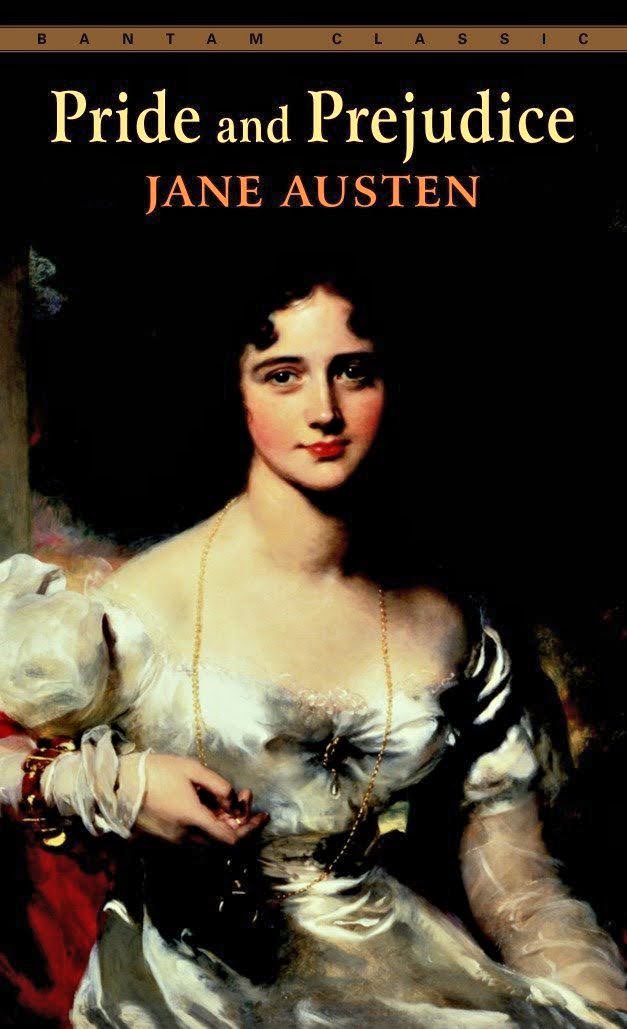
For example, here’s the entry for a famous opening line by Jane Austen, in the Sex, Love, Marriage, & Family category, with the commentary:

    “It is a truth universally acknowledged, that a single man in possession of a good fortune, must be in want of a wife.

          - Jane Austen, Pride and Prejudice (1813)

Described by English writer and editor Robert McCrum as “The archetypal First Line for an archetypal tale,“ these opening words have achieved legendary status, appearing near the top of almost every Top Ten list ever compiled. In How to Read Literature (2013), British scholar Terry Eagleton described this line as “One of the most renowned opening sentences in English literature” and “a small masterpiece of irony.“ Eagleton went on to add: “The irony does not exactly leap off the page. It lies in the difference between what is said—that everyone agrees that rich men need wives—and what is plainly meant, which is that this assumption is mostly to be found among unmarried women in search of a well-heeled husband.” In the novel, the narrator continued: “However little known the feelings or views of such a man may be on his first entering a neighborhood, this truth is so well fixed in the minds of the surrounding families, that he is considered the rightful property of some one or other of their daughters.”

Naturally, GreatOpeningLines.com includes many widely-known opening lines, like that one by Austen. But what makes the website even more fun and fascinating to me is that Grothe includes many that — while not necessarily famous — are thought-provoking examples of well-crafted lines that demonstrate the art of grabbing a reader’s attention and making them want to read on.

I also like that Grothe doesn’t limit his choices to highbrow literature. He also includes examples from the realms of pop culture.

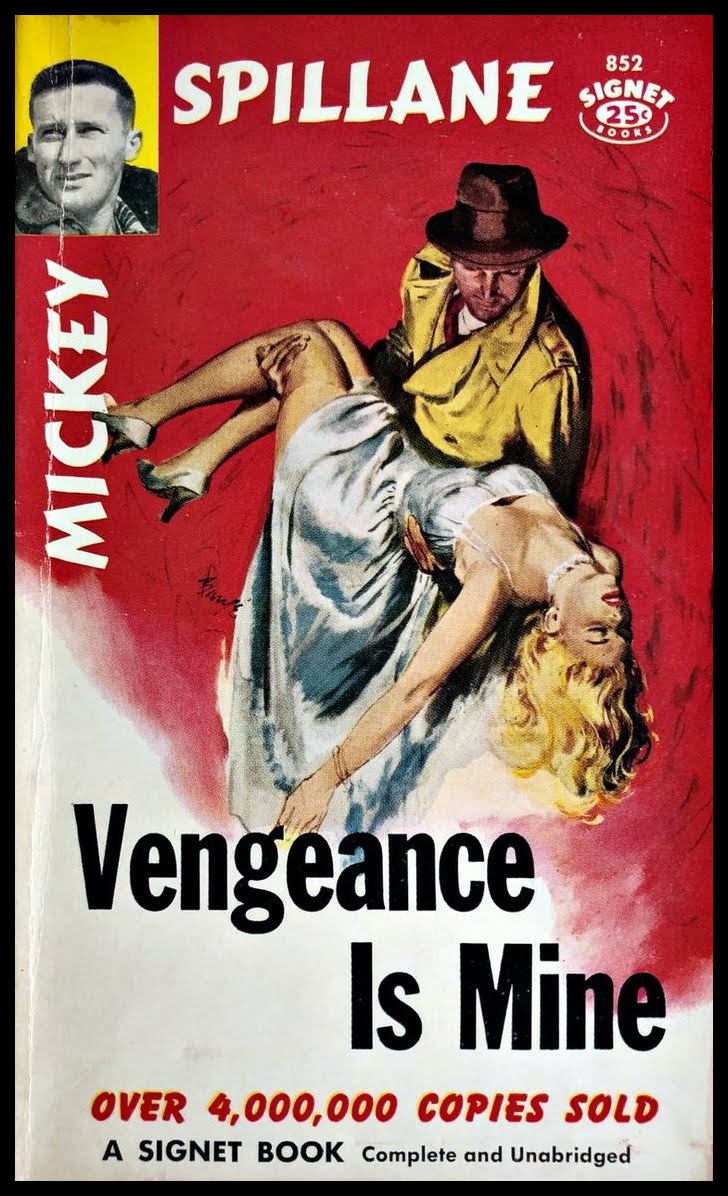
For example, in the Crime/Detective & Suspense/Thrillers category, Grothe includes several opening lines from novels written by the great crime and mystery novelist Mickey Spillane. Spillane who created, among other things, the Private Detective character Mike Hammer, was one of the grandmasters of that genre and I’m a big fan of his work. Among the opening lines by Spillane that Grothe incudes is one of my faves:

“The guy was dead as hell. He lay on the floor in his pajamas with his brains scattered all over the rug and my gun in his hand.”

     - Mickey Spillane, Vengeance is Mine (1950)

Grothe notes in a comment that those words have been cited as one of the “25 of the Best Opening Lines in Crime Fiction” by Greg Levin, who is himself an award-winning crime novelist.

If you enjoy reading quotations or reading in general, Grothe’s GreatOpeningLines.com will provide many hours of browsing enjoyment. If you’re a writer, the quotations it features amount to a master class in writing what are often the most important lines in any book or story.

In a nutshell, I love Dr. Mardy Grothe’s new GreatOpeningLines.com website and highly recommend it. It’s an amazing new contribution to the literary world — endlessly fascinating, deeply thought-provoking, and, for the aspiring writer, highly inspirational.

*     *     *     *     *     *     *     *     *     *

Comments? Corrections? Questions? Email me or post them on my Famous Quotations Facebook page.

RECOMMENDED READING: BOOKS BY DR. MARDY GROTHE…

December 20, 2021

“These are the times that try men’s souls…”


During the Revolutionary War, getting soldiers to stay in the Continental Army was one of the biggest problems facing the American commander in chief, General George Washington.

Many American soldiers were non-professional militiamen who volunteered for a limited number of months, usually during the spring or summer. After a short stint, they were legally allowed to go back their farms to harvest their fall crops — and typically did.

There were regular soldiers in the Continental Army. But many deserted once they experienced the horrors of combat or the miserable conditions in winter camps. Others left after becoming disgusted by the lack of reliable pay and supplies.

In 1776, Thomas Paine, an aspiring writer who had emigrated to America from England two years earlier, became an aide-de-camp to American General Nathanael Greene.

That winter, Paine decided to write something to try to renew the patriotic spirit of American soldiers and discourage them from deserting or going home when their enlistment period was up.

It ended up being the first in his series of “American Crisis” pamphlets.

The opening sentence became a famous quotation; the second embedded two related metaphors into our language: 

“These are the times that try men’s souls. The summer soldier and the sunshine patriot will, in this crisis, shrink from the service of their country; but he that stands it now, deserves the love and thanks of man and woman.”
Paine’s rousing treatise was first published in the Pennsylvania Journal on December 19, 1776, then issued as a printed pamphlet on December 23.
 
The piece provided some very timely and welcome inspiration to General Washington.
 
In recent months, the British had repeatedly defeated the Americans in battle and forced the Continental Army to retreat from New York into New Jersey. Washington’s troop strength was severely reduced by a combination of death, disease, “summer soldiers” and desertion.
 
On December 18, a despondent Washington said in a letter to his cousin in Virginia:

“I think the game is pretty near up, owing, in a great measure, to the insidious arts of the Enemy…but principally to the accursed policy of short enlistments, and placing too great a dependence on the militia.”
Five days later, after reading Paine’s new pamphlet, Washington had it read aloud to his remaining troops to inspire them in advance of a upcoming attack he’d planned.
 
On Christmas night of 1776, he and about 2,400 American soldiers made the legendary crossing of the Delaware River. The next day, at the the Battle of Trenton, they surprised and soundly defeated a group of 1,500 professional Hessian mercenaries who were fighting for the British.
 
That victory renewed the morale of Washington and the soldiers of the Continental Army. It also attracted many new recruits to the American ranks.
 
During the next six years, Paine wrote a series of fifteen more “Crisis” pamphlets. They helped inspire the sense of patriotism and resolve that eventually led to the success of the American Revolution. But none are as significant or as remembered as his first.
 
It played a role in a turning point in the Revolutionary War. Its opening sentence became one of the best known quotes in American history. And, the second sentence made “summer soldier” and “sunshine patriot” common terms of derision that are still used today to refer to people who give half-hearted commitment to a cause or abandon it when the going gets tough.
 

*     *     *     *     *     *     *     *     *     *

Comments? Corrections? Post them on my Famous Quotations Facebook page or send me an email.

Related reading and viewing…


November 30, 2021

The odd links between “Louie Louie” and Ralph Nader’s “Unsafe At Any Speed”...


It’s truly odd, but true: the renowned rock song
“Louie Louie” and the history-making book about car safety by Ralph Nader, titled Unsafe At Any Speed, are connected by both a quote and by a date.

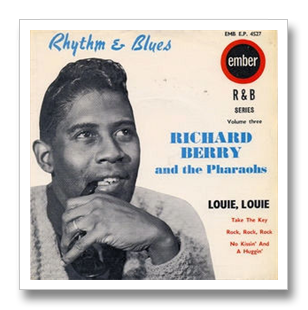
“Louie Louie” was written in 1955 by the pioneering American R&B singer and songwriter Richard Berry (1935-1997).

In a nod to the popularity Calypso music was enjoying in the mid-1950s, Berry gave “Louie Louie” a Caribbean flavor by writing the lyrics in an island-style patois.

It’s basically a love song.

A Jamaican sailor explains to some guy named Louie that he misses his girlfriend. He can’t wait to sail home, take his “fine little girl” in his arms and tell her “I never leave again.” In the chorus he says dolefully: “Louie Louie, me gotta go.” (As in, go home.)

Berry recorded “Louie Louie” with his group the Pharaohs in 1957. Their version was a modest regional hit in the Northwest, where it became a popular party song covered by many local rock bands.

One of those bands was a group of white kids from Portland, Oregon who called themselves The Kingsmen. They made a raucous, poorly-recorded version of the song in 1963.

It was released in May and entered Billboard’s Top 40 singles chart on November 30, 1963.

The fuzziness of the recording and the garbled attempt at Jamaican patois by The Kingsmen’s lead singer, Jack Ely, made the lyrics notoriously hard to understand. Nonetheless, their catchy cover version was a huge hit, selling over a million copies.

By 1964, “Louie Louie” was being gleefully sung by teenagers nationwide, often using salacious Mondegreen variations of the words.

The actual lyrics as written by Berry and slightly altered by Ely are not overtly sexual. But many “dirty” versions were made up and spread.

For example, in the original lyrics the second verse starts with: “Three nights and days we sailed the sea. / Me think of girl constantly.”

In raunchified versions, those words were turned into things like: “Each night at ten, I lay her again / I f--k my girl all kinds of ways.”

It was soon rumored that the hard-to-understand lyrics on The Kingsmen record were themselves obscene. This caused much moral harrumphing by parents, the press, politicians and bureaucrats.

Indiana Governor Matthew Welsh declared the record to be “pornographic” and banned it from the state’s airwaves. (And he was a liberal Democrat!) Some radio stations in other states also banned it.

The FCC and FBI conducted official investigations — at taxpayers’ expense — to try to decipher the muffled words on The Kingsmen’s hit single to determine if it should be banned nationwide.

Federal investigators grilled Richard Berry and Jack Ely and listened intently to the Kingsmen record played forward and backward at various speeds, including 33 rpm, 45 rpm and 78 rpm.

In February 1964, one exasperated FCC official uttered what became a legendary rock history quote when he reported:

       “We found the record to be unintelligible at any speed.”

Around that same time in 1964, lawyer Ralph Nader was working as an advisor to a U.S. Senate subcommittee that was investigating car safety (or, more accurately. the general lack of safety features in cars built at the time).

Armed with the knowledge he gained from that work, Nader wrote a shocking book on the subject. He titled it Unsafe at Any Speed.

It became a bestseller, gave Nader his initial fame as an industry gadfly and led to many improvements in car safety we now take for granted, such as seat belts and anti-lock brakes.

The similarity between Nader’s book title and the FCC official’s quote about “Louie Louie” suggests that Ralph was either aware of the FCC quote — or blissfully unaware that his title was an ironic echo of “unintelligible at any speed.”

What makes the connection even odder is the fact that Unsafe At Any Sped was published on November 30, 1965, exactly two years to the day after The Kingsmen’s recording of “Louie Louie” entered the Billboard Top 40.

*     *     *     *     *     *     *     *     *     *

Comments? Corrections? Questions? Email me or post them on my Famous Quotations Facebook page.

Further reading and listening…

Copyrights, Disclaimers & Privacy Policy


Copyright © Subtropic Productions LLC

All original text written for the This Day in Quotes quotations blog is copyrighted by the Subtropic Productions LLC and may not be used without permission, except for short "fair use" excerpts or quotes which, if used, must be attributed to ThisDayinQuotes.com and, if online, must include a link to http://www.ThisDayinQuotes.com/.

To the best of our knowledge, the non-original content posted here is used in a way that is allowed under the fair use doctrine. If you own the copyright to something posted here and believe we may have violated fair use standards, please let us know.

Subtropic Productions LLC and ThisDayinQuotes.com is committed to protecting your privacy. For more details, read this blog's full Privacy Policy.