Showing posts with label April 2. Show all posts

September 22, 2021

April 2, 1865 – “The Night They Drove Old Dixie Down”


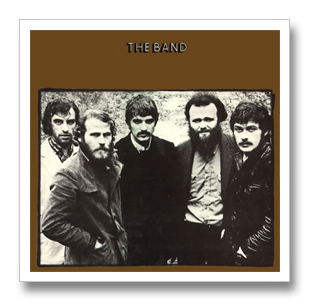
On September 22, 1969, The Band released the great self-titled album that includes what became one of their most famous songs, “The Night They Drove Old Dixie Down.”

Like many songs by The Band, it was primarily written by lead guitarist Robbie Robertson, with creative contributions from the other Band members: Levon Helm, Rick Danko, Garth Hudson, and Richard Manuel.

The haunting lyrics tell a tale about the final days of the American Civil War in 1865 as recalled by Virgil Caine, a fictitious Confederate soldier and farmer.

It opens with the plaintive voice of Helm, singing the now well-known words of the first verse.

Other Band members added harmonies on the chorus, which begins with the line that gave the song its title.

       “Virgil Caine is the name, and I served on the Danville train,
       ‘Til Stoneman’s cavalry came and tore up the tracks again. 
       In the winter of ‘65, we were hungry, just barely alive. 
       By May the 10th, Richmond had fell,
it’s a time I remember oh so well. 
       The night they drove Old Dixie down...”

On The Band’s website, there’s an interesting in-depth article about the lyrics, compiled by teacher, author and music historian Peter Viney.

As it notes, Richmond had indeed already fallen by “May the 10th.” But that’s not the date when Richmond fell.

Richmond, Virginia — the capital of the Confederate States of America during the Civil War — actually fell to Union troops on the night of April 2, 1865.

That night was, in many ways, the death knell for the Confederacy and the metaphorical “night they drove Old Dixie down.”

The fall of Richmond came after a long siege that started in 1864.

During those months, Union Army troops led by Gen. George Stoneman repeatedly tore up “the Danville tracks” and other railroad lines going to Richmond to keep supplies from reaching Confederate soldiers and civilians.

Meanwhile, at the orders of Gen. Ulysses S. Grant, the top Union commander, Gen. Phil Sheridan laid waste to the farmland surrounding Richmond. 

In The Penguin Book of The American Civil War, historian Bruce Catton wrote:

“A Federal army trying to take Richmond could never be entirely secure until the Confederates were deprived of all use of the (fertile and productive) Shenandoah Valley, and it was up to Sheridan to deprive them of it. Grant’s instructions were grimly specific. He wanted the rich farmlands so thoroughly despoiled that the place could no longer support a Confederate army; he told Sheridan to devastate the whole area so thoroughly that a crow flying across the Valley would have to carry its own rations. This Sheridan set out to do…Few campaigns in the war aroused more bitterness than this one.”

By late March of 1865, Confederate troops and citizens in Richmond were literally starving.

It was clear the city would soon fall.

So, on April 2, 1865, Confederate President Jefferson Davis, his Cabinet, and most of the remaining Confederate troops and civilians abandoned Richmond and fled south.

At the time, Richmond residents called it “Evacuation Sunday.”

Robbie Robertson gave it the more poignant name, “the night they drove Old Dixie down.” 

That day, Confederate soldiers were ordered to set fire to the armories and warehouses they left behind.

The fires spread, setting Richmond ablaze. They continued to burn into the night, devastating large areas of the city.

The “Fall of Richmond” led to a rapidly unfolding downward spiral for the South.

By April 9, Gen. Robert E. Lee surrendered to Grant at Appomattox Courthouse.

On May 5, the Confederate Government was dissolved. The Civil War was officially over.

However, two final war-related events did occur on the May 10th date noted in The Band’s song.

On May 10, 1865, Union troops captured Jefferson Davis in Georgia.

By then, most Confederate troops had laid down their arms and accepted the amnesty terms offered by President Abraham Lincoln.

There were a few die-hards, like the notorious “Bushwhacker” William Quantrill, who kept up a guerrilla-style raids on Union towns.

But on same day Jefferson Davis was captured, Quantrill and his men were ambushed by Union troops in Kentucky and Quantrill fatally wounded. He lingered for almost a month before he finally died on June 6. 

*     *     *     *     *     *     *     *     *     *

Comments? Corrections? Questions? Email me or post them on my Famous Quotations Facebook page.

Related reading, listening, and viewing…

April 02, 2021

“Open the pod bay doors, HAL.”

Open the pod bay doors Hal
On April 6, 1968, director Stanley Kubrick’s visionary science fiction film 2001: A Space Odyssey was released to movie theaters nationwide in the United States.

The film, developed from the short story “Sentinel” by Arthur C. Clarke, had its initial premiere in Washington, D.C. on April 2nd, followed by local premieres in New York City and Los Angeles.

On April 6th, with the film’s general release, movie audiences throughout the country first heard several memorable lines that are cited by many books and websites as being among the most famous movie quotes of all time.

The most widely-known (and spoofed) line from 2001 is spoken by astronaut David Bowman (actor Kier Dullea).

He says it to HAL, the sentient HAL 9000 computer on the US space craft Discovery One, which is on a mysterious mission to Jupiter. (The name HAL is short for “the H-euristically programmed AL-gorithmic computer.”)

It comes near the end of the movie, after HAL begins killing off the ship’s crew.

Bowman takes a small space pod outside to retrieve the body of fellow astronaut Frank Poole (Gary Lockwood).

As Bowman returns to the ship, he asks HAL to let him back inside with the famous line: “Open the pod bay doors, HAL.”

This leads to one of most chilling exchanges in movie history:

2001 A Space Odyssey (1968) poster by Robert McCallDAVE:  Open the pod bay doors, Hal.
HAL:  I’m sorry, Dave. I’m afraid I can’t do that.
DAVE:  What’s the problem?
HAL:  l think you know what the problem is just as well as l do.
DAVE:  What are you talking about, Hal?
HAL:  This mission is too important for me to allow you to jeopardize it.
DAVE:  I don’t know what you're talking about, Hal.
HAL:  l know that you and Frank were planning to disconnect me, and I’m afraid that's something I can’t allow to happen.
DAVE:  Where the hell’d you get that idea, Hal?
HAL:  Although you took very thorough precautions in the pod against my hearing you, I could see your lips move.
DAVE:  All right, Hal. I’ll go in through the emergency air lock.
HAL:  Without your space helmet, Dave, you’re going to find that rather difficult.
DAVE:  Hal, I won’t argue with you anymore. Open the doors!
HAL:  Dave...This conversation can serve no purpose anymore. Goodbye.

Dave uses a desperate maneuver to get back into the spaceship, without the helmet he’d left behind. He then heads determinedly to the room that houses HAL’s “brain,” and begins to shut down the rogue AI computer.

During the shutdown process, HAL senses what’s happening and utters one of the other famous lines from the film:

       “Dave, my mind is going. I can feel it.”

As HAL’s mind goes, he begins singing the old song “Daisy Bell,” which he was taught by his programmers:

       “Daisy, Daisy, Give me your answer do.
        I’m half crazy, all for the love of you.”

After HAL’s mind is fully gone, the minds of the movies’ viewers are blown away by the final scenes.

First comes the psychedelic “star gate” sequence, then a series of scenes showing Dave Bowman aging, dying, and finally being reborn as a shining “space baby.”

Would you like me to tell you what it all means?

I’m sorry, folks, I’m afraid I can’t do that.    

*     *     *     *     *     *     *     *     *     *

Comments? Corrections? Questions? Email me or post them on my Famous Quotations Facebook page.

Further reading and viewing:


Copyrights, Disclaimers & Privacy Policy


Copyright © Subtropic Productions LLC

All original text written for the This Day in Quotes quotations blog is copyrighted by the Subtropic Productions LLC and may not be used without permission, except for short "fair use" excerpts or quotes which, if used, must be attributed to ThisDayinQuotes.com and, if online, must include a link to http://www.ThisDayinQuotes.com/.

To the best of our knowledge, the non-original content posted here is used in a way that is allowed under the fair use doctrine. If you own the copyright to something posted here and believe we may have violated fair use standards, please let us know.

Subtropic Productions LLC and ThisDayinQuotes.com is committed to protecting your privacy. For more details, read this blog's full Privacy Policy.